

Computing Science

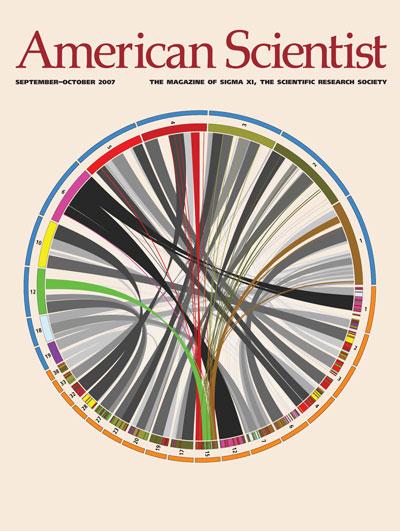
The sequencing of the dog genome, completed in 2005, revealed large overlaps between the dog and human genomes. Some of the patterns in dog-human homology—similarity arising from shared ancestry—are depicted here in a circular diagram created by Martin Krzywinski of Canada's Michael Smith Genome Sciences Centre in Vancouver, British Columbia. Selected human (top, blue outer band) and dog (bottom, orange outer band) chromosomes are arranged around the circle, with bands connecting regions of homology between the two species. Where DNA on a dog chromosome matches human DNA, color-coded stripes indicate the relevant human chromosome. In "Genetics and the Shape of Dogs," Elaine A. Ostrander describes some results from the dog genome project, including detailed work on chromosome 15. The spray of colored ribbons on the cover illustration shows the pattern of connections between this chromosome and seven human chromosomes. Further information and displays of additional data (such as the one shown at left) can be found at mkweb.bcgsc.ca/circos.
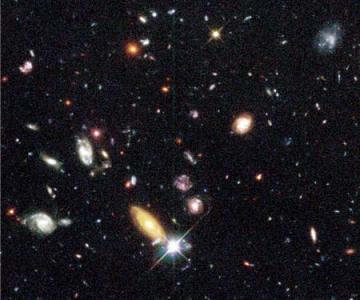
Computer simulations suggest that the answer may be yes. But observations of extrasolar systems will provide the ultimate test
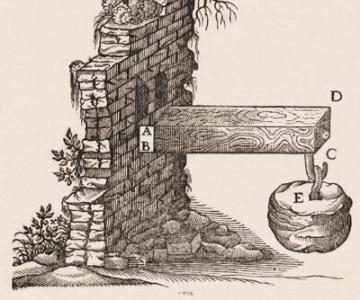
The body armor of the queen conch is much tougher than comparable synthetic materials. What secrets does it hold?
Thomas Jefferson and James Madison participated in a small "revolution" against British weather-monitoring practices

Foodfight: The Citizen's Guide to a Food and Farm Bill · Six Legs Better: A Cultural History of Myrmecology · An Ocean of Air: Why The Wind Blows and Other Mysteries of the Atmosphere
Click "American Scientist" to access home page