Nanoparticles Versus Superbugs
By Jose Ruben Morones-Ramirez
Minuscule specks of silver and gold could offer new weapons in the fight against antibiotic-resistant microbes.
Minuscule specks of silver and gold could offer new weapons in the fight against antibiotic-resistant microbes.
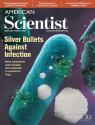
The images of Escherichia coli that we were seeing from our transmission electron microscope were startling, almost disorienting, and inspiring. Under the microscope, these common infectious bacteria usually show up as neat, rod-shaped cells. But we had exposed this collection of microbes to minuscule particles of silver before taking their portrait, and it was clear that they had been profoundly damaged: Their outer membranes had collapsed inward, their cell walls were distorted, and their jellied cytoplasmic guts had spilled out. We were seeing a tiny catastrophe, a bacterial wipeout (see image below).
Click "American Scientist" to access home page

American Scientist Comments and Discussion
To discuss our articles or comment on them, please share them and tag American Scientist on social media platforms. Here are links to our profiles on Twitter, Facebook, and LinkedIn.
If we re-share your post, we will moderate comments/discussion following our comments policy.