The Ghost of Henry’s Past
By Nwabata Nnani
A new documentary focuses on a decade-long search for an elusive elephant.
March 24, 2026
Science Culture Anthropology Biology Evolution Anthropogeography Review Zoology
Both the ancient knowledge of master trackers, as well as cell phone video, lead to a poetic conclusion of a decade-long search for the ghost elephant in Werner Herzog's new documentary that premiered March 7 on National Geographic.
Directed and narrated by Herzog, Ghost Elephants: An Epic Search for a Mythical Giant follows Steve Boyes, a conservation biologist and National Geographic Explorer, on the latter end of his 10-year journey to find an elusive herd of ghost elephants in the eastern Angolan Highlands in South Africa. The extremely rare and endangered African forest elephant, or ghost elephant, earns its name from its furtive avoidance of human interaction, with most of its movement occurring at night. The ghost elephants' stealth behavior creates a challenge for Boyes and his team to find and protect the region’s surviving herd.
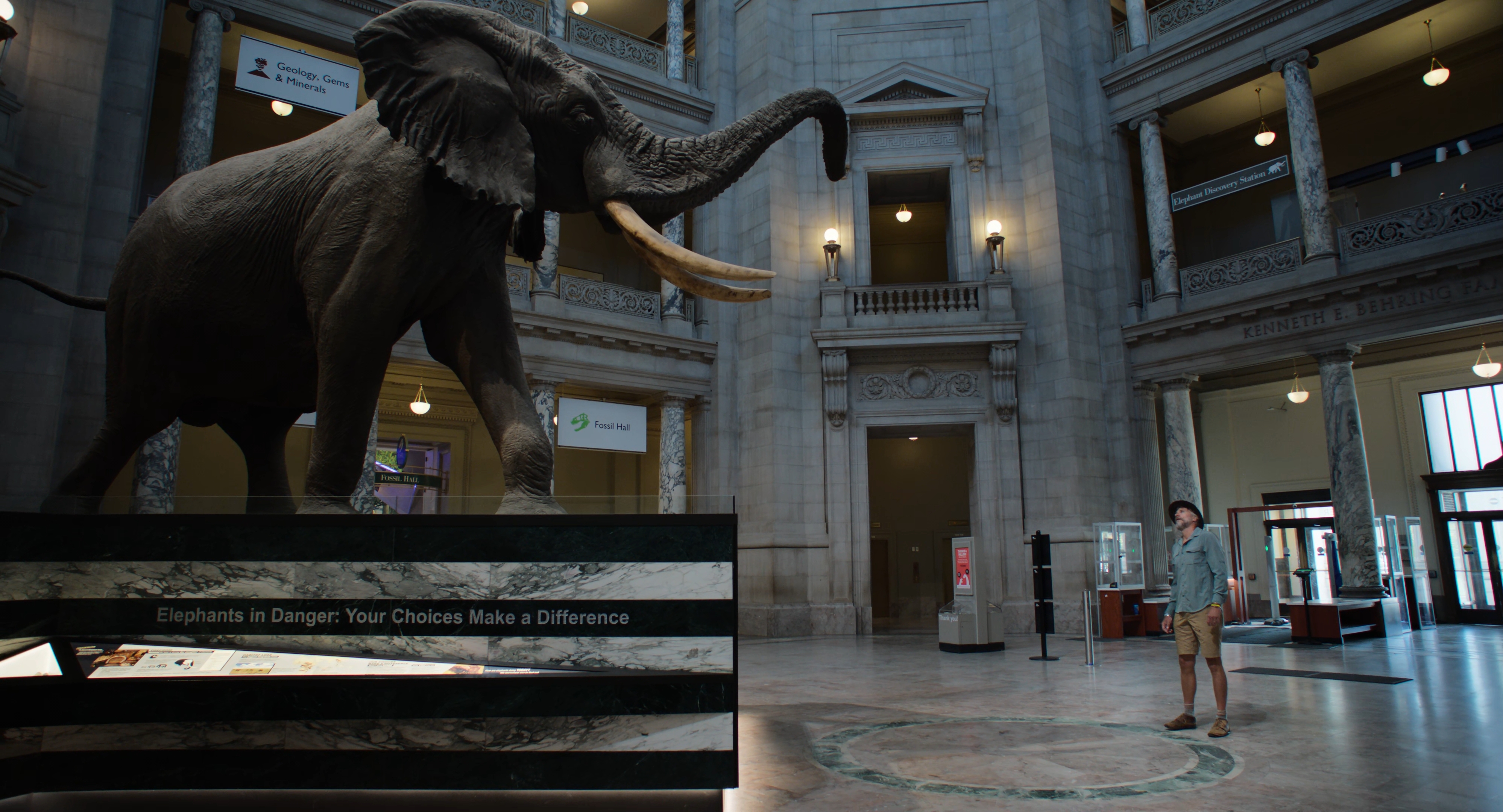
The documentary opens in Namibia with the KhoiSan bushmen mimicking the sounds and movement of the elephant. Believed by the KhoiSan to be a spiritual being, the bushmen use their arms as elephant trunks, sweeping the sand in an S-like pattern. They arch forward and widen their stance to resemble an elephant’s gait. This same reverence for the animal is shown when the film cuts to Boyes staring in awe at the statue of Henry at the Smithsonian National Museum of Natural History in Washington, DC. Henry’s presence and grandeur can be felt through Boyes’s thoughtful gaze.
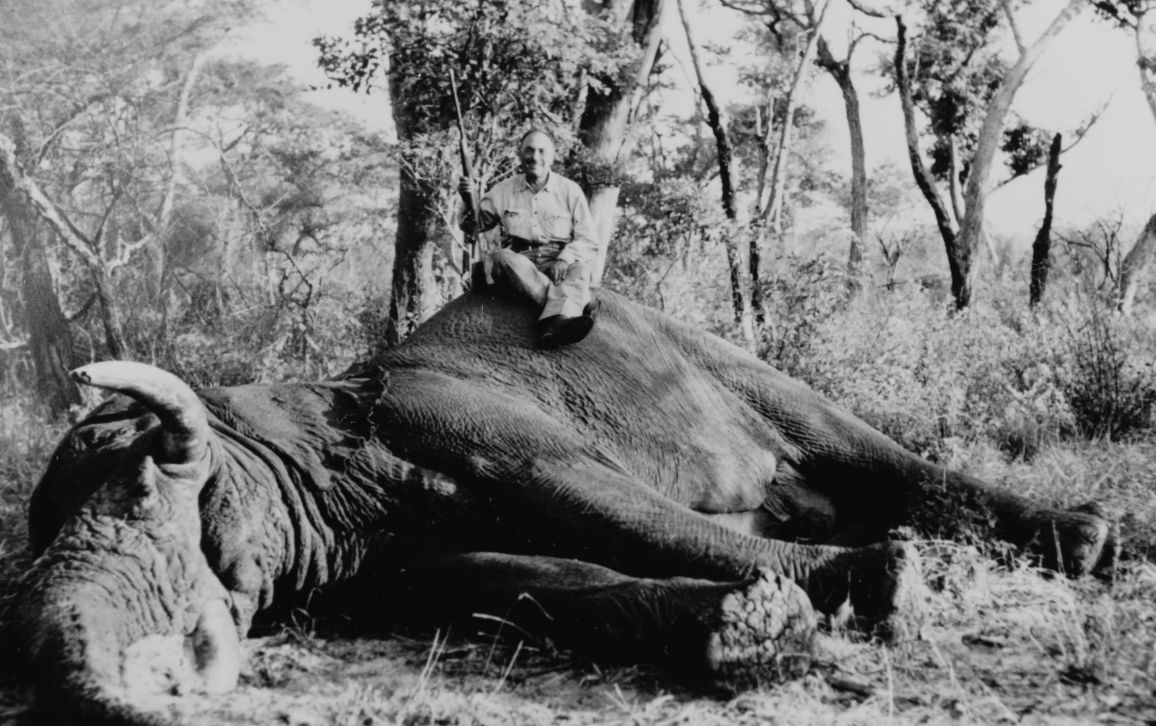
Henry, also known as the Fénykövi Elephant, is the largest recorded elephant to date, leaving many like Boyes wondering about the descendants of such a majestic creature. Henry stood at 13 feet and 2 inches and weighed a whopping 11,000 kilograms. Henry’s skull and tusks were so heavy that they could not be mounted, necessitating the use of replicas, but viewers were provided with a glimpse of Henry’s donated specimens in the museum’s storage area, with Hungarian-born Madrid businessman and big-game hunter Josef Fénykövi’s original labels still attached.
Skellig Rock, Inc
Henry was killed near the Angolan Highlands, on a plateau at nearly 1,219 meters of elevation. Also known as the Water Tower of Africa, the plateau serves as a major resource for rivers that extend to countries such as Congo, reaching the Atlantic Ocean. In the past decade, Boyes and his team have found more than 200 unique species of various animals known only to the Angolan Highlands, and new to scientific discovery.
The emotional journey of finding Henry’s descendants begins with an ominous interview between Herzog and Boyes, with Herzog asking Boyes if he believes he’ll learn anything from a ghost elephant. Boyes responds,
. . . I’m not going to learn anything from a ghost elephant. Maybe it’s better staying as a dream. But it’s something—we chase dreams as humans, we share dreams with each other, and maybe it’ll stay as a dream for the rest of our lives. . . . Maybe that’s better.
There’s some suspense on whether the journey will result in a dream fulfilled or a dream deferred.
Similar to the capture and killing of Fénykövi’s Henry, Boyes enlists the help of Namibian master trackers Xui and Xui Dawid, whose ancient knowledge will aid in Boyes' most successful journey to the eastern Angolan Highlands in search of the ghost elephant. The journey requires Boyes and team to travel for seven days from Namibia to Angola. Prior to setting off, molecular ecologist Jordana Meyer visits to teach the master trackers how to collect and record DNA samples using elephant dung, with the help of DNA shields to maintain the samples’ stability.
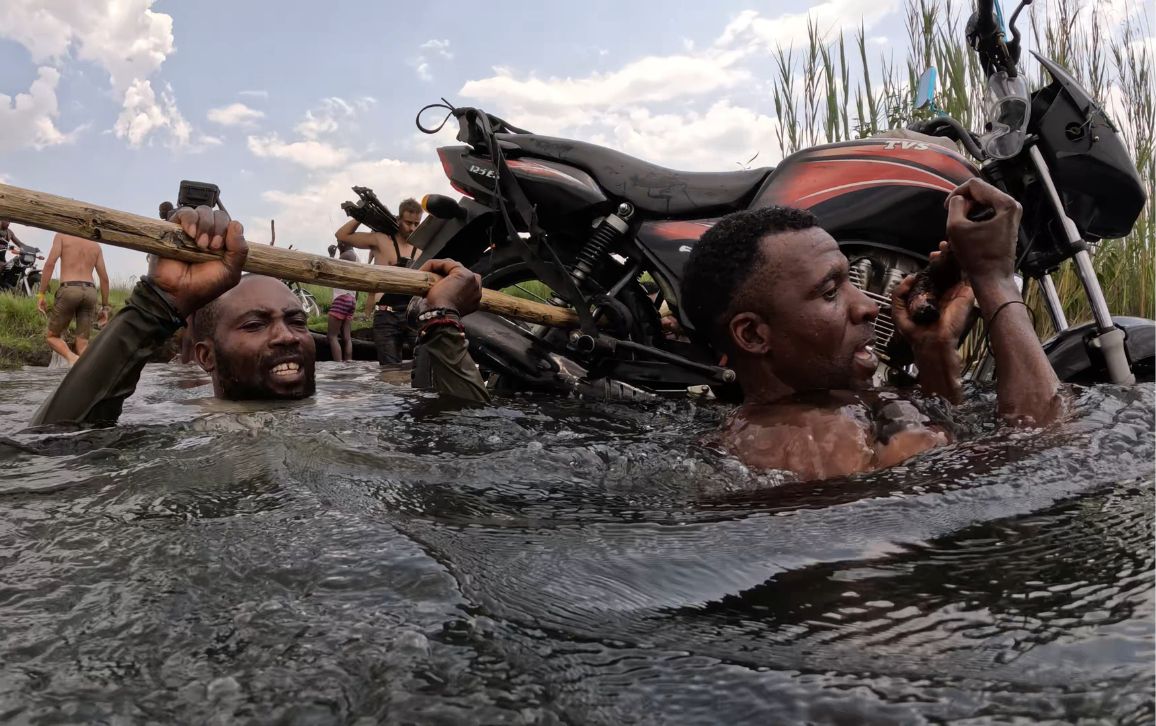
Later, Angolan Luchazi tribe hunters join Boyes’s team for their seven-day voyage from Namibia to the eastern Angolan Highlands, as guides for their homeland. If not recorded, the story of their voyage would be unimaginable. The more than 1,600 meter expedition required a nine-vehicle convoy, some equipped with armor plating, to travel across lands containing the threat of active landmines from the Angolan Civil War; 12 motorbikes for the paths inaccessible by truck; and the crossing of multiple waterways while toting all of their supplies and equipment. Traveling to a landscape the size of Europe, Boyes hopes to gather DNA skin samples of a ghost elephant to determine whether they are descendants of Henry, or a new species of elephant altogether.
Skellig Rock, Inc
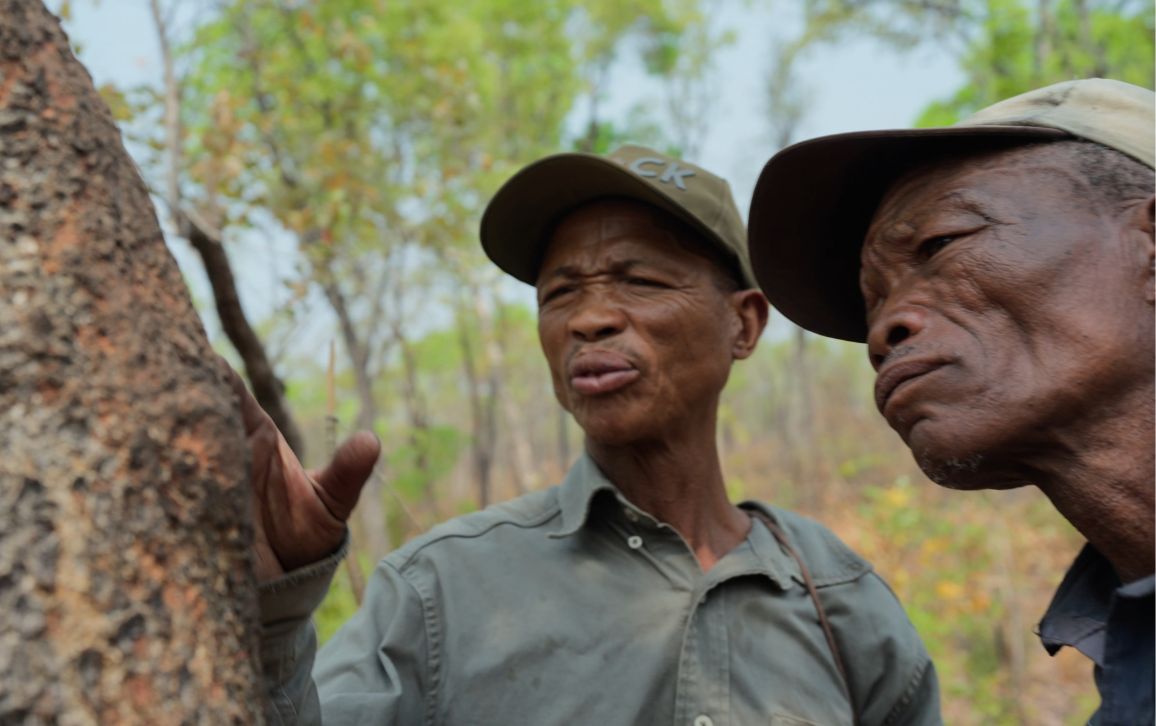
The day after setting up their basecamp, the master trackers travel another 48 kilometers on foot and come across fresh elephant tracks and dung. When the master trackers find markings and shoulder rubbings on trees, they believe these shoulder rubbings are traces of a herd of 16 elephants: the males protecting the herd, with one bull at the front and three to four bulls on the left and right. Xui and Xui Dawid then find something overlooked by everyone: a single elephant hair on a tree along the elephant’s tracks. Boyes sets up two state-of-the-art cameras to monitor the situation.
Skellig Rock, Inc
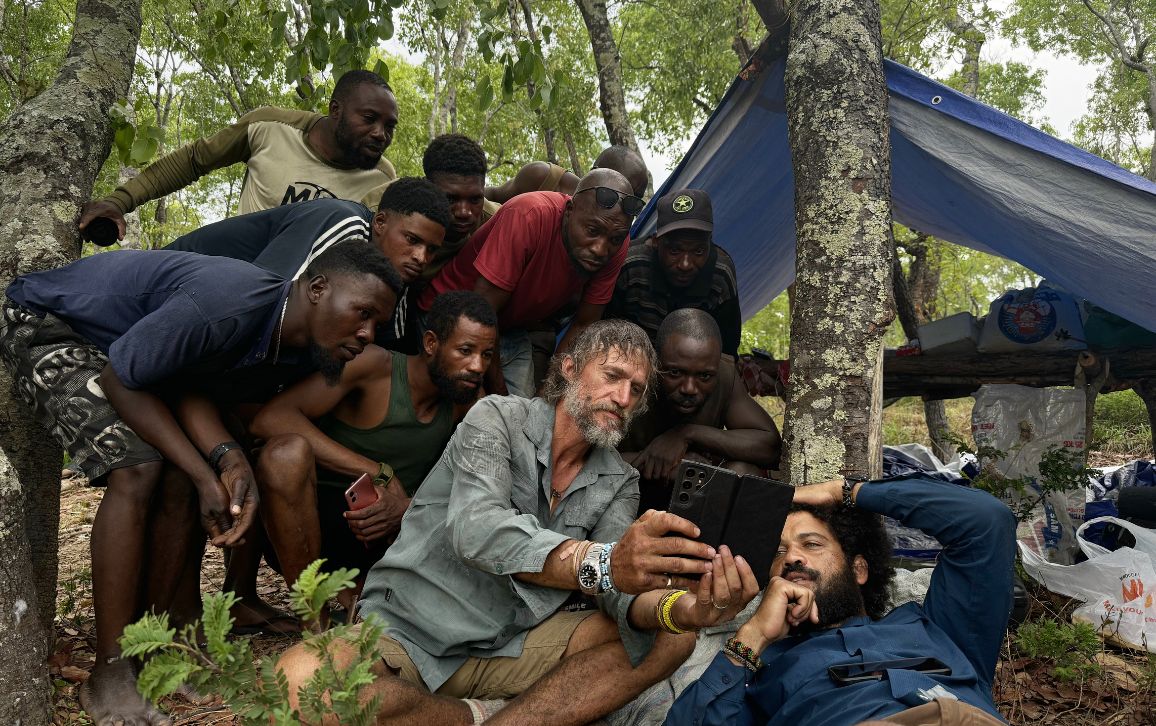
Days later, separate teams go out across the Eastern Highlands in search of more DNA samples to collect. Master trackers Elias and Antonio set off to meet Boyes, and that’s when the first sighting of a ghost elephant happens. Captured on Antonio’s cell phone video, a dark figure can be seen nested in the forest.
After two days of rest and a two-hour trek through the Highlands, Boyes and the master trackers see an elephant in person. In an effort not to scare the elephant away, they leave the cameramen behind and slowly approach. Boyes captures a clean video shot of the elephant while Xui shoots the arrow intended to gather the DNA skin sample. But will their efforts be enough to determine the origin of the ghost elephant?
Ariel Leon Isacovitch
The documentary aces the acknowledgments of the tribes and their customs. Storytelling is a vital part of many African cultures, and I appreciate Boyes' willingness to seek each tribe's respect. As a Nigerian American, I felt a closeness to the cultural traditions displayed, such as when Xui, Xui Dawid, and Boyes sought journey mercies for secure travel and a safe return home from the KhoiSan village chief and its elders; or when Boyes asked Regedor Katketche, the King of the Nkangala, for his permission to enlist the help of the Luchazi hunters' expertise to explore Angolan territory. I do wonder if Boyes took this same approach in his other attempts to track down the ghost elephant.
Although the documentary starts very slowly, the poetic ending of Boyes’ journey to the Angolan Highlands in search of the ghost elephant is certainly worth watching. All that’s left now is to compare Henry’s DNA samples with the samples gathered by Boyes and his team. The DNA samples will need to be sifted through, using genetic sequencing methods to determine whether these are Henry’s descendants or a new elephant species all together.
I look forward to the journals and information produced from the DNA samples collected and to what we’ll learn about Henry, his descendants, or an all-new species of elephant.
American Scientist Comments and Discussion
To discuss our articles or comment on them, please share them and tag American Scientist on social media platforms. Here are links to our profiles on Twitter, Facebook, and LinkedIn.
If we re-share your post, we will moderate comments/discussion following our comments policy.