This Article From Issue
May-June 2026
Volume 114, Number 3
Page 186
FEARLESS, SLEEPLESS, DEATHLESS: What Fungi Taught Me About Nourishment, Poison, Ecology, Hidden Histories, Zombies, and Black Survival. Maria Pinto. 240 pp. University of North Carolina Press, 2025. $24.
Many people can take a walk through the woods and come back with the same familiar impressions: the tall trees towering above, the damp smell of leaf litter, birds singing. Unless people are mycologists or foragers, or the rare kind of person inclined to slow down and really pay attention, fungi remain invisible. When mushrooms appear, they are often treated as something out of place, such as weird growths or suspicious-looking blobs; things to step around and ignore.
Maria Pinto’s Fearless, Sleepless, Deathless: What Fungi Taught Me about Nourishment, Poison, Ecology, Hidden Histories, Zombies, and Black Survival is an enthusiastic guide to seeing what usually goes unseen. Pinto insists, with both scientific grounding and personal urgency, that fungi are not an ecological side note but central to shaping life on Earth. “Mycelium built and then connected our world,” she writes.
Gargoyle888/Wikimedia Commons/CC BY 3.0
“One way to think about the anatomy of this book,” Pinto tells us, “is that its essays will imitate mycelium.” Rather than following a straight path, the book’s essays spread in many directions, connecting unexpected subjects in ways that mirror the mycelial networks they describe. Across nine essays, each guided by a particular fungus, Pinto moves from the Jamaican mushroom to the eerie zombie-ant fungus to what she calls the “mushroom at the end of the world.” The final piece turns to undescribed species of fungi. Each essay embodies ways to explore ecology, Black history, colonialism’s lasting impact, and the lives and knowledge that often go unnoticed.
Pinto writes, “If fungi are so ubiquitous and important, so fascinating and strange, why do we know so little about them?” She uses this question to open the door to both biology and bigger questions about knowledge—what fungi are, what they do, and why scientific knowledge itself has gaps and biases. Western science only formally recognized fungi as their own kingdom separate from plants and animals within the past 60 years, a reminder that putting things into categories isn’t the same as truly understanding them, and that science reflects the culture around it. Pinto points out that millions of fungi species likely exist, but fewer than 10 percent have been described.
Ad Right
Fungi are essential to decomposition and nutrient cycling, help shape soil and plant health, and even influence our microbiomes. They are literally all around us and inside us. But, as Pinto notes, their importance is often overlooked because so much of what they do happens out of sight, and the glimpses of beauty we do see often disappear fast. Pinto’s gift is her ability to make this hidden world feel accessible. She invites readers to look more closely at what is already around them. In describing her habit of scanning the roadside from a moving car, she writes, “I take advantage of this slowness to watch for deer and mushrooms in the banked woodland nearby. For a perpetual passenger like me, this game has made the world that races along the periphery a companion, so that I know the highway landscapes in eastern Massachusetts more intimately than I know many of its neighborhood streets.”
That attentiveness extends beyond the roadside. Pinto places fungi within culture, language, and diaspora instead of treating them as merely biological organisms. She explains, for example, a Jamaican term for mushrooms, “junjo,” and traces the debate around its origins. In 1958, Irish anthropologist Robert Wallace Thompson published an article in the journal American Speech examining the word and responding to German linguist Manfred Sandmann, who had suggested that the Haitian term for mushroom, “djon djon,” must derive from the French “champignon.” The implication was clear: Black Caribbean people could not have carried their own word for mushroom across the Atlantic. To bolster his claim, Sandmann cited 18th-century naturalist Hans Sloane, who had speculated in 1707 that mushrooms had been introduced to Jamaica from Europe, because he had found only two species there. Pinto meets this reasoning with biting humor: “Reader, I hope I don’t have to tell you that there were fungi in Jamaica for millennia before Sloane was a fishhook in his mother’s eye.” She points out that these conclusions weren’t based on evidence, but on indifference. Recognizing the diversity of Jamaican fungi, she suggests, would have required two simple acts: caring and looking. Her critique extends beyond mushrooms and becomes a broader criticism of how Western science has often approached Black and colonized places as uncharted territory—landscapes assumed empty until “discovered,” and knowledge assumed nonexistent until documented by Europeans.
In response to that history of erasure, Pinto turns to Black history, presenting fungi as companions in Black survival, a theme woven through her subtitle and her attention to the African diaspora. She discusses the Butiko clan in Uganda, whose name means “mushroom” and whose symbol is the mushroom itself. Here, fungi become more than organisms—they become identity, belonging, and kinship. Upon discovering this, Pinto “instantly felt an odd thrill, because I had been calling mushrooms my kin for years.”
She also explores darker dimensions of fungi. Bringing readers into the strange world of what’s called the zombie-ant fungus, she uses its parasitic control as a metaphor for enslaved people and others historically denied autonomy. Describing an infected ant, Pinto says, “Where her volition was—there is now Ophiocordyceps unilateralis. It works through her, straining her corpse toward an undreamt-of goal . . . Is there anything more lonely than this? . . . She is a zombie.” Although this fungus evokes a loss of agency, fungi surface elsewhere in the book as part of survival under slavery. Pinto notes that enslaved people may have used poisonous mushrooms against their enslavers, while also emphasizing that fungi have long served as food and medicine. Black survival in her work includes nourishment, healing, and deep ecological knowledge, and is not reduced or limited to poison or resistance. At a time when Black relationships to land are often ignored or framed only through pain, Pinto insists on tenderness and connection.
Pinto roots the text in her own life, making it accessible and relatable for the reader. She notes, “When I go looking for mushrooms, I find everything else, including what fruits authentically from within me when nobody is watching.” Born in Jamaica, raised in rural South Florida, and now based in the Boston area, her writing reveals someone whose life has always been in conversation with the land. Her book reads like scientific field notes woven through with personal memoir, humor, history, and insightful social commentary. In one passage, she writes:
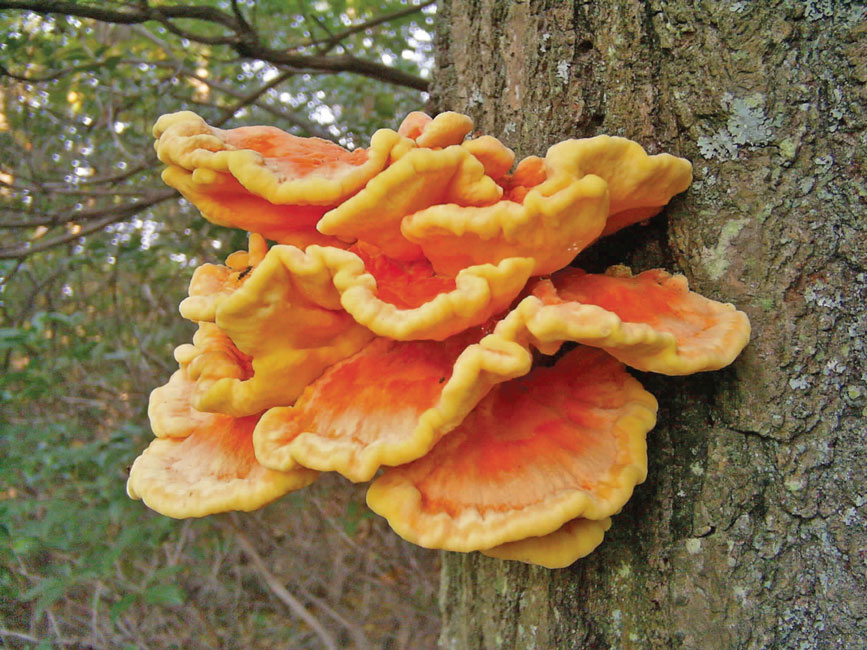
If it weren’t for the search for fungi, chances are the only time my head would be at this level outdoors is when I crouch to relieve myself while camping. But the search for tiny pins and camouflaged fruits, the tricksters, has brought me low, on my knees, my cheek against fallen leaves. . . . I’m reminded of a Nepali hiking partner, her basket full of colorful chicken of the woods. . . . During our hike, she told me that despite this town’s housing prices, which tell us who the market believes has a right to live here, the Land knows we belong to it and so reveals her gifts.
Fearless, Sleepless, Deathless encourages readers to pay closer attention to the natural world around them and to notice the life teeming beneath what is too often dismissed as just dirt, while also questioning who gets to define knowledge and whose observations are valued. In doing so, Pinto challenges readers to recognize how racism and colonialism have shaped what we know and what we think is worth noticing. You can feel her excitement about biology—the networks of mycelium and their electrical activity that can resemble language, the wide diversity of species, and their unusual reproductive strategies—while also acknowledging that science is shaped by history and culture. For Pinto, fungi are both a scientific wonder and cultural wisdom: a reminder that the world is full of hidden connections, and that survival for all life depends on relationships that we rarely acknowledge.
American Scientist Comments and Discussion
To discuss our articles or comment on them, please share them and tag American Scientist on social media platforms. Here are links to our profiles on Twitter, Facebook, and LinkedIn.
If we re-share your post, we will moderate comments/discussion following our comments policy.