How to Recruit and Retain Underrepresented Minorities
By Ashanti Johnson, Melanie Harrison Okoro
From kindergarten through fulltime positions, what works to engage aspiring minority researchers in studying ocean science?
From kindergarten through fulltime positions, what works to engage aspiring minority researchers in studying ocean science?
DOI: 10.1511/2016.119.76
Editor’s Note: Ashanti Johnson not only studies aquatic environments but also is committed to mentoring young underrepresented minorities pursuing careers in science, technology, engineering, or mathematics (STEM). More than 10 years ago, she began a mentorship program for such students. Melanie Okoro is a former graduate mentee, now her coauthor and colleague, and is an environmental scientist at the National Oceanic and Atmosphere Administration (NOAA). Their story of mentorship and collaboration starts before they met, when Johnson was a child.
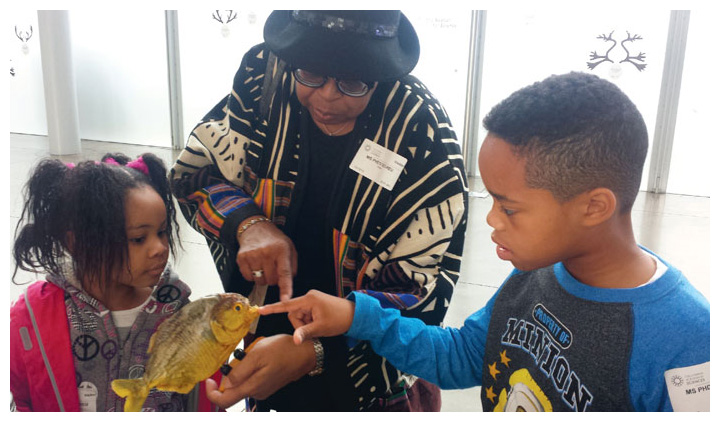
I became interested in science in the 1970s, when African Americans and U.S. Hispanics comprised only 5 percent of the STEM workforce: As a third grader growing up in Oak Cliff, which at the time was a predominately African American community in Dallas, Texas, I was given a class assignment as part of my school’s talented and gifted program to identify a career that I wanted to pursue and then to conduct independent research on it. Some kids weren’t sure what they wanted to do, but for me, that was easy: I wanted to be the “next” Jacques Cousteau. I watched the TV icon and oceanographer on PBS almost every Saturday. He worked with people of various nationalities, who spoke with different accents, as they explored exotic underwater locations. Inspired by his program, each year from third through twelfth grade, I conducted a new independent project related to the ocean.
At home, my parents supplied me with National Geographic magazines, took me to the Dallas Aquarium at Fair Park, and purchased individual volumes of Funk and Wagnalls Encyclopedia at the neighborhood grocery store to support my fascination with the sea and science. At school, my teachers, strong African American women, encouraged me to pursue my dreams, even though none of them had any experience related to oceanography or could point me to a single person of color who could serve as my role model. My family and teachers instilled in me the belief that that if I applied myself I could achieve my career goal. They also taught me that it was important to be successful so that I could give back to the community and help others achieve.
Photograph courtesy of Jeramie T. Strickland.
These lessons served me well throughout my education, from public school through my doctoral studies at Texas A&M University in College Station. Despite any challenge, I was determined to persevere. My success represented success for my family and community. I felt that each career achievement would put me in a better position to reach out and help others.
When I stepped onto the research vessel Gyre to collect sediment samples from the Gulf of Mexico during my doctoral studies, I was thrilled to go on my first oceanographic research expedition. In addition to supervising my first undergraduate research assistant, an African American male civil engineering major, during the cruise I also could assist my fellow scientists in collecting their samples. I was starting to live the dream of that little girl from Oak Cliff!
I was then, as I am now, committed to pursuing my fascination with the aquatic environment while also serving my community, so that other young people of color who aspire to a career in STEM are provided with the knowledge, skills, resources, and connections they need. As I reflect on my career, I see that the encouragement within my community and the educational programs I had were essential to my believing in myself enough to stay the course through the arduous journey of learning how to do research.
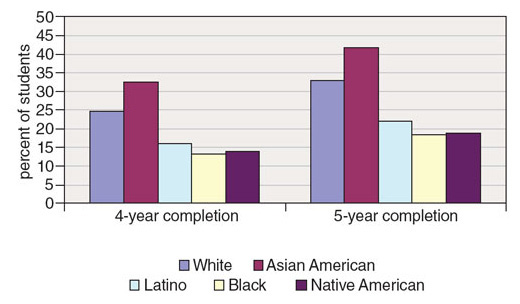
We note that research on underrepresented minorities in STEM has shown that culturally relevant educational programming, along with mentorship from senior colleagues who are from similar backgrounds, can make all the difference. While underrepresented minority students aspire to STEM majors in college at roughly the same rate as their non-minority peers (and have done so since the late 1980s), historically they have lower completion rates, according to a 2011 report by the National Academy of Sciences.
For the United States’ scientific enterprise to stay competitive, we must educate more diverse leaders, who can effectively collaborate across, private, public, and social sectors. The perspectives of underrepresented minorities must be welcomed. Their needs should be identified and appreciated. Their aspirations to provide people in all three sectors with the ability to speak their language should be considered. These leadership qualities are needed to address such challenges of underrepresentation. However, they are hard to develop—particularly in the United States—owing to the low numbers of minorities in marine science fields, academic institutions, businesses, governments, and nonprofits, as well as the different incentives and cultures of these sectors.
In our experience, underrepresented minority leaders and stewards have a strong sense of mission. These characteristics cannot be overlooked when recruiting them. Many underrepresented minorities pursuing postsecondary degrees aspire to positions of influence and leadership and can be attracted to government or nonprofit service, even at the expense of personal financial wealth creation. We’ve found that educational programs that successfully retain minorities work in part because they engage students in solving problems relevant to their communities.
The challenges associated with diversifying the marine science workforce are not uncommon or new. In fact, they affect most STEM fields in the United States. For example, according to a 2015 National Science Foundation report, over the past two decades (1993–2012), advanced degrees earned by underrepresented minorities in science and engineering have been extremely low, only increasing slightly over the years—from 6 to 14 percent for master’s degrees and 4 to 6 percent for PhD’s. In addition, while there are modest upward trends (especially for baccalaureate degrees), minority student degree attainment in marine science–related fields remains relatively unchanged.

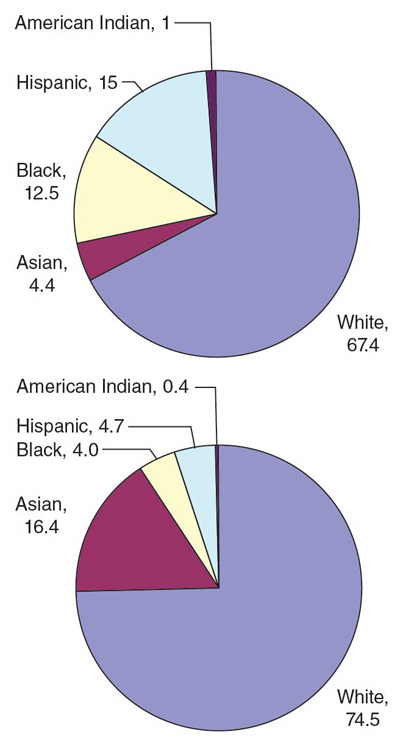
Adapted from Landivar, L. C., 2013, Disparities in STEM Employment by Sex, Race, and Hispanic Origin.
Underrepresented minority groups comprised 28.5 percent of our national population in 2006, but represented only 9.1 percent of college-educated Americans in science and engineering occupations. Given the significant representation of minorities in the total U.S. population, these percentages are striking and translate to the obvious lack of their full engagement in postsecondary STEM programs. To address such disparities, in 2003 I (Johnson) launched the Minorities Striving to Pursue Higher Degrees of Success in Earth System Sciences (MS PHD’S) initiative, which offers mentorship and professional development opportunities to underrepresented minorities interested in these fields, guided by those with similar backgrounds.
In spite of the growing demand for expertise in certain STEM disciplines, including marine sciences, U.S. academic institutions often struggle to recruit and retain domestic students from historically underrepresented populations (African Americans, Asian/Pacific Islanders, Hispanic/Latino/Latina, and Alaska/Native Americans). It goes without saying that a highly diverse team generates more innovative ideas than a homogeneous one. Indeed, research has shown that diverse teams are more effective problem solvers and outperform groups of the best individual problem solvers. It is also well documented that a diversity of experiences provides richer educational environments for students and faculty. However, it’s not just about increasing the percentage. Diversity may not automatically lead to more effective problem solving, unless individuals in such groups are involved in the conversation. Diversity is not about filling a quota; it’s about creating a system in which all talents have an opportunity to rise and different perspectives are encouraged rather than suppressed.
The need for a diverse workforce to sustain innovation, as well as to fill critical STEM jobs, is well documented. A more diverse marine science workforce will help address those needs. It’s easy to see statistics on the languishing retention of minority groups in STEM careers and feel demoralized. But there is much room for hope—there are places that are succeeding at each level of the science career pipeline. We can all learn from them.
Editor’s Note: As one of the MS PHD’S early participants, Okoro has directly benefited from this mentorship program. Her story shows why such programs are so successful at turning around retention rates for minorities in STEM:
In high school, I dreamed of becoming a medical doctor. But during college, I realized I could not cut a straight line in a stick of butter and I faint at the site of blood. But my interest in science remained. As a child I had loved swimming and fishing with my great-grandmother and twin sister in Lake Martin in Alabama. During my undergraduate studies, those childhood experiences led me back to the water, into my career as an environmental scientist for NOAA Fisheries.
We've found that educational programs that successfully retain minorities work in part because they engage students in solving problems relevant to their communities.
As a doctoral student at the University of Baltimore Maryland, I often spent hours in the field, conducting research in isolation in wetlands and urban streams. Meanwhile, I taught environmental science courses at a nearby community college to gain teaching experience. I saw my advisors, now colleagues of mine, working on grant applications while juggling research and teaching responsibilities. Although I loved research and teaching, I wasn’t certain I wanted a career in academia. The rigors that I witnessed, combined with the lack of diversity in my field, wasn’t appealing to me. I asked myself: Is this the life of a scientist—and if so, is it the life for me? I had just two more years before completing my PhD and little knowledge of other career opportunities in my field. I wondered if there were other graduate students who had similar experiences. While discussing my thoughts with a fellow student, she suggested that I apply for the MS PHD’S program.
In 2009, I was accepted into the program and I met my current coauthor, Ashanti Johnson. I’d never met an oceanographer before, and certainly not one who was an African-American woman. I’d also never met so many underrepresented minorities in my field. As Johnson and others in the program began to share their stories, my perspective on life as a scientist changed. Listening to them taught me four keys lessons: (1) There’s going to be some isolation in research, and it comes with the territory; (2) there’s a lack of diversity within science, but programs like MS PHD’S are working to change that; (3) a career in academia isn’t just about research; and (4) there are other viable career paths for scientists besides entering academia.
Through MS PHD’S, I learned from Johnson the importance of a mentor to encourage me to persevere in a field that right now still loses more aspiring minority scientists than it retains. As colleagues, we share similar goals for supporting minority students, and I have continued to be involved in the MS PHD’S program as a mentor. Through more than 30 years of collective experience participating in and directing postsecondary programs focused on increasing underrepresented minorities in STEM careers, we have observed effective strategies that contribute to successful and sustainable increases in minority participation in the marine sciences.
Adapted from National Academy of Sciences, 2011, Expanding Underrepresented Minority Participation.
A 2007 National Academies of Science report that focused on increasing underrepresented minorities in STEM fields showed that African Americans, Hispanics, and other minorities have comprised only 15 percent of science and engineering occupations. Through the years this number has essentially remained the same. The proportion of underrepresented minorities in science and engineering would need to triple or quadruple to match their share of the overall U.S. population.
Peers, mentors, and accessible educational programming—whether provided during school, like those offered to talented and gifted students, or outside of school, like Cousteau’s TV show—were essential to our development as scientists. To help retain minority students in the STEM majors to which they aspire, we believe it’s important that currently successful programs be examined and bolstered, and such practices encouraged in the communities and institutions where they are most needed.
The Savannah State University (SSU) Youth and K–12 Outreach in Marine Science Programs are an effective model to recruit young underrepresented minorities to the U.S. marine science workforce through a collaboration with the NOAA Living Marine Resources Cooperative Science Center. These programs stand out because they successfully engage the full spectrum of educational levels, from kindergarten to college seniors. The empowering way the process of discovery is presented allows students to recognize their potential in marine science careers.
The Science Center activities were designed to help students see themselves in and prepare for marine science research, management, and public policy careers via three K–12 outreach and exposure programs: Coast Camp, the National Ocean Sciences Bowl regional Southern Stingray Bowl, and SSU Ocean Ambassadors. The combination of these programs includes material appropriate for a variety of educational levels throughout the year. Coast Camp offers a four-week, hands-on marine science experience for youth (ages 7–18). The Southern Stingray Bowl is a high-school program that encourages extracurricular study of ocean science and culminates in a national, team-based competition.
The Ocean Ambassadors program provides professional development opportunities for underrepresented minority students in marine science at SSU, who volunteer to help educate the community through local events, classroom visits, and campus tours. About 50 percent of the K–12 students who interact with the Ambassadors are from underrepresented minority groups. SSU students who serve as Ambassadors network with professional marine scientists and accumulate community service hours required by their curricula or extracurricular organizations.
The Center’s K–12 outreach activities engage about 1,200 diverse local K–12 students annually. Many minority participants go on to pursue marine science degrees. Since its initial participation in the educational center in 2001, SSU has done an outstanding job of providing hands-on science exposure activities for K–12 underrepresented minority students, while also facilitating professional development opportunities for their students. For many of the K–12 students, the SSU programs are their first exposure to marine science.
The marine science community has long recognized the importance of providing real-life scientific engagement. Introductory science classes, while important, often cannot fully convey what doing scientific research is like because of the time constraints of a course. Undergraduate research experiences, commonly supported by the U.S. NSF and NOAA, offer competitive pay to participants and provide essential opportunities that increase retention of underrepresented minorities.
In 2016, NSF will sponsor 32 summer REU ocean science sites at institutions of higher education. An NSF-sponsored REU site typically consists of about 10 undergraduates who contribute to ongoing research at their host institutions, each under the guidance of an experienced researcher. While the majority of these programs are targeted at rising juniors and seniors, three accept freshmen and sophomores and are located at SSU, University of Maryland-Eastern Shores (two historically minority serving institutions), and the University of North Florida. Underrepresented minority students are encouraged to apply to all of these REU sites.
The REU programs at minority-serving institutions have also incorporated programming shown to increase underrepresented minorities in STEM. For example, in addition to conducting independent research projects mentored by senior colleagues, REU fellows also participate in discussions and workshops focused on addressing trends in the scientific profession—from career-building tips to broader ethical issues in research. Thus, students get an “inside perspective” in fields that they may initially approach feeling intimidated, like an outsider.
Several recent studies have shown that freshmen, sophomores, and underrepresented minorities who have participated in REU programs tend to remain more engaged in science compared to those who did not. As such, offering more REU-type experiences for underclassmen in underrepresented groups would increase their recruitment to marine science.
In addition to REU programs, there are several other undergraduate opportunities that use successful strategies to recruit a more diverse marine science workforce. They include the Multicultural Initiative in the Marine Sciences Undergraduate Participation (MIMSUP) and the Association for the Sciences of Limnology and Oceanography Multicultural Program (ASLOMP). Similar to a typical REU program, in the sense that students engage in research, MIMSUP also provides additional coursework and formal opportunities for knowledge reinforcement as they engage in K–12 teaching at the Western Washington University Shannon Point Marine Center. Mentors are selected with care, based on mutual interests and potential for collaboration. Since 1991, participants in this program have been diverse: 48 percent Hispanic; 25 percent African American; 14 percent Pacific Islander; and 13 percent Native American and Native Alaskan. After earning their bachelor’s degrees, 65 percent of MIMSUP alumni have enrolled in graduate and professional degree programs, and many are now part of the U.S. marine science workforce.In 2002, the White House awarded this minority-focused program with a Presidential Award for Excellence in Science, Math, and Engineering Mentoring in recognition of outstanding efforts to mentor minority STEM students.
Marine science programs that award more graduate degrees to minorities succeed by achieving a critical mass of underrepresented students to form cohorts and by incorporating a number of other career-development strategies.
Members of the Association for the Sciences of Limnology and Oceanography started ASLOMP to create an inclusive environment for underrepresented minority students (primarily undergraduates) at their annual meeting. Student participants are assigned mentors at the meeting who have established careers. With their help, undergraduate and graduate student participants more readily navigate this large international conference. Mentor–mentee pairs discuss scientific presentations at the meeting and take part in networking activities. More than 700 students have participated in the program since its inception. Many former participants report identifying opportunities that led them into marine research. Others have gone on to assume leadership roles within the Association. Many meeting mentors, including myself (Johnson), have met and recruited graduate students, summer undergraduate research assistants, and even postdoctoral researchers via the ASLOMP program.
There is widespread variation in the support that a minority student aspiring to a STEM career may find at their institution. That is why we have been so involved in the MS PHD’S program, which forms a national support network of underrepresented minorities interested in the geosciences. The MS PHD’S initiative, currently hosted by the Institute for Broadening Participation, assists underrepresented minority students in achieving their professional and personal goals. Under Johnson’s leadership, the nonprofit organization has helped over 60,000 STEM students (mostly minorities) identify or obtain additional professional opportunities, such as funding or academic positions. Via the MS PHD’S and Pathways to Ocean Sciences programs (see www.pathwaystostem.org for details), the Institute provides training for underrepresented minorities interested in marine science careers.

Adapted from National Academy of Sciences, 2011, Expanding Underrepresented Minority Participation.
Over more than a decade and across 11 cohorts, MS PHD’S has promoted 238 minority students and recent doctoral degree recipients committed to achieving outstanding Earth system science careers. Of these, 127 participants self-identified as African American; 49 as Puerto Rican; 29 as Hispanic; 16 as American Indian; 8 as Native Pacific Islander; 9 as White, Other Hispanic, African, Asian or Multi-Ethnic. Women comprise 61 percent of alumni; 39 percent are men. A total of 135 students began participation in MS PHD’S as graduate students, 95 as undergraduates, and the remaining 8 as post-baccalaureate in transition to graduate school. To date, 62, 21, and 16 alumni have received doctorate, master’s, and baccalaureate degrees, respectively, and are currently employed within the geosciences. The remaining 139 participants are still enrolled in undergraduate and graduate programs.
This minority-focused geoscience program has been commonly referred to as a model for mentoring and professional development. As the founder and director of MS PHD’S, one of us (Johnson) received a 2008 Presidential Award for Excellence in Science, Math, and Engineering Mentoring.
Adapted from National Academy of Sciences, 2011, Expanding Underrepresented Minority Participation.
There are few programs with the specific purpose of recruiting underrepresented students to marine science graduate degrees. But such programs do exist. Examples include: The University of South Florida LSAMP Bridge to the Doctorate Fellowship and the Alfred P. Sloan Minority Doctoral Scholarship programs in the College of Marine Science; the Hall-Bonner Program for Minority Doctoral Scholars in the Ocean Sciences, a collaborative project between Hampton University, Old Dominion University, and the Virginia Institute of Marine Science; and NOAA’s Educational Partnership Graduate Student Program.
The number of underrepresented minorities awarded marine science graduate degrees at these institutions increased significantly after implementing these programs. They succeed by achieving a critical mass of underrepresented minority students to form cohorts and by incorporating a number of other career-development strategies.
Successful programs generally emphasize the importance of a support network of peers and senior researchers as well as culturally relevant, hands-on educational and research opportunities throughout a student’s science education. Indeed, our own experiences also demonstrate these factors as key to recruiting minorities to STEM fields. Educational programs should be project-driven, so that students experience the feeling of authentic discovery, innovation, and ownership.
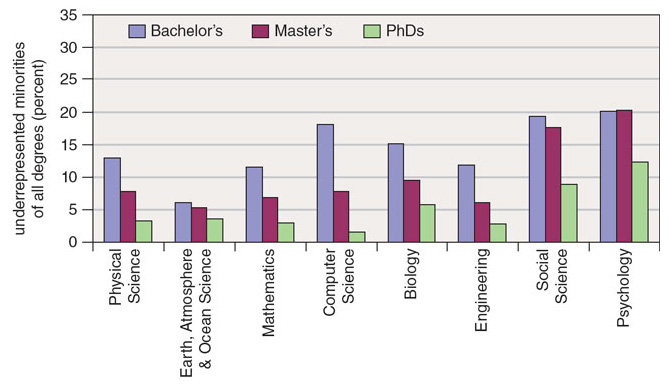
Adapted from National Academy of Sciences, 2011, Expanding Underrepresented Minority Participation.
To develop diverse future marine science leaders and stewards, the traditional template for recruitment and retention of underrepresented minorities needs to change. At the K–12 level, and through various advanced stages of education, students are asked, “What do you want to be when you grow up?” However, in our experiences interacting with student audiences across the country, we have found that this is not the right question. Students frequently desire to exact change or solve problems in their local communities or in global challenges. To this effect, Jaime Casap, Google Education Senior Evangelist, has recommended instead asking kids, “What problems do you want to solve?”
The aspirations of minority leaders and stewards are both a challenge and an opportunity for academic institutions. Many companies, too, have robust recruitment programs related to marine science fields, such as ESRI, ExxonMobil, and Chevron. However, more can be done to retain underrepresented minority leaders and stewards by expressly incorporating their societal concerns in training programs and by offering professional engagement opportunities across sectors.
For the future marine science workforce to reflect the diversity of the nation, programs that increase the number of young underrepresented minority professionals need to be supported and expanded, while we also continue exploring new strategies. Much attention thus far has focused on undergraduate training, but fewer resources are allocated to support underrepresented minorities with PhD’s during the research and postdoctoral phases of their careers. This particular place in the STEM pipeline has not received as much attention, but is also where critical losses occur. New initiatives might include doctoral student programs that support underrepresented minorities, professional programs aimed at early and mid-career scientists, or ambassador programs that cultivate relationships across business sectors. We believe that providing opportunities for underrepresented groups in STEM fields and cultivating supportive communities will help shape a better U.S. economy and society for everyone.
Click "American Scientist" to access home page

American Scientist Comments and Discussion
To discuss our articles or comment on them, please share them and tag American Scientist on social media platforms. Here are links to our profiles on Twitter, Facebook, and LinkedIn.
If we re-share your post, we will moderate comments/discussion following our comments policy.