Careful tailoring of the chemistry and structure of biomaterials is leading to the production of devices that can help repair or replace damaged tissue.
They say there’s nothing like the real thing, and this adage couldn’t be more true than for an organism’s body.
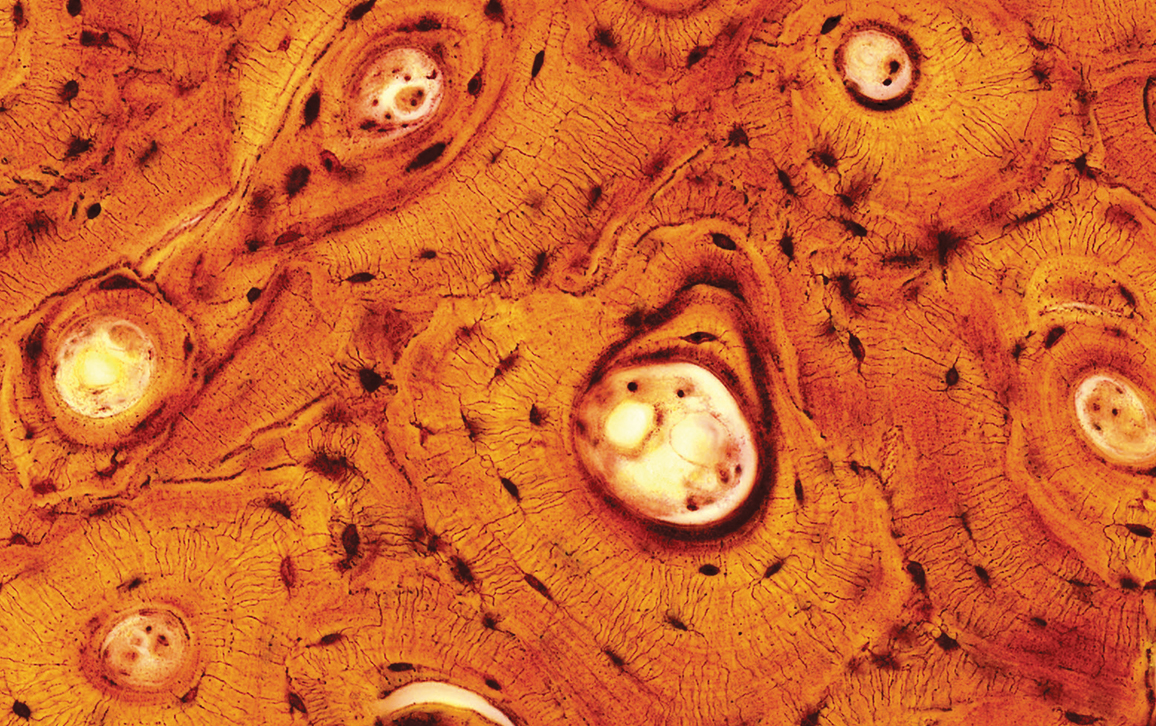
Bone may appear to be a solid, heavy scaffold to support the body, but it is a living, complex organ. This light micrograph of compact bone shows the intricacies of bone’s heirarchical structure, allowing it to be strong but less brittle and heavy. When bone becomes too damaged to fix itself properly, implants made of materials similar to that bone can come to the rescue.
To discuss our articles or comment on them, please share them and tag American Scientist on social media platforms. Here are links to our profiles on Twitter, Facebook, and LinkedIn.
If we re-share your post, we will moderate comments/discussion following our comments policy.

American Scientist Comments and Discussion
To discuss our articles or comment on them, please share them and tag American Scientist on social media platforms. Here are links to our profiles on Twitter, Facebook, and LinkedIn.
If we re-share your post, we will moderate comments/discussion following our comments policy.